A State-by-State Breakdown of India’s Most Ferocious Heatwave Season
By Special Correspondent, Climate & Environment DeskSources: IMD / AQI.in / PTI | Updated: May 25, 2026
PEAK TEMPERATURES AT A GLANCE
47.2°C — Brahmapuri, Maharashtra (National High)
46.4°C — Banda, Uttar Pradesh
45.0°C — Balangir, Odisha
44.0°C — Bhagalpur, Bihar
42.0°C — Kota, Rajasthan
50+ cities — All world’s hottest cities located in India
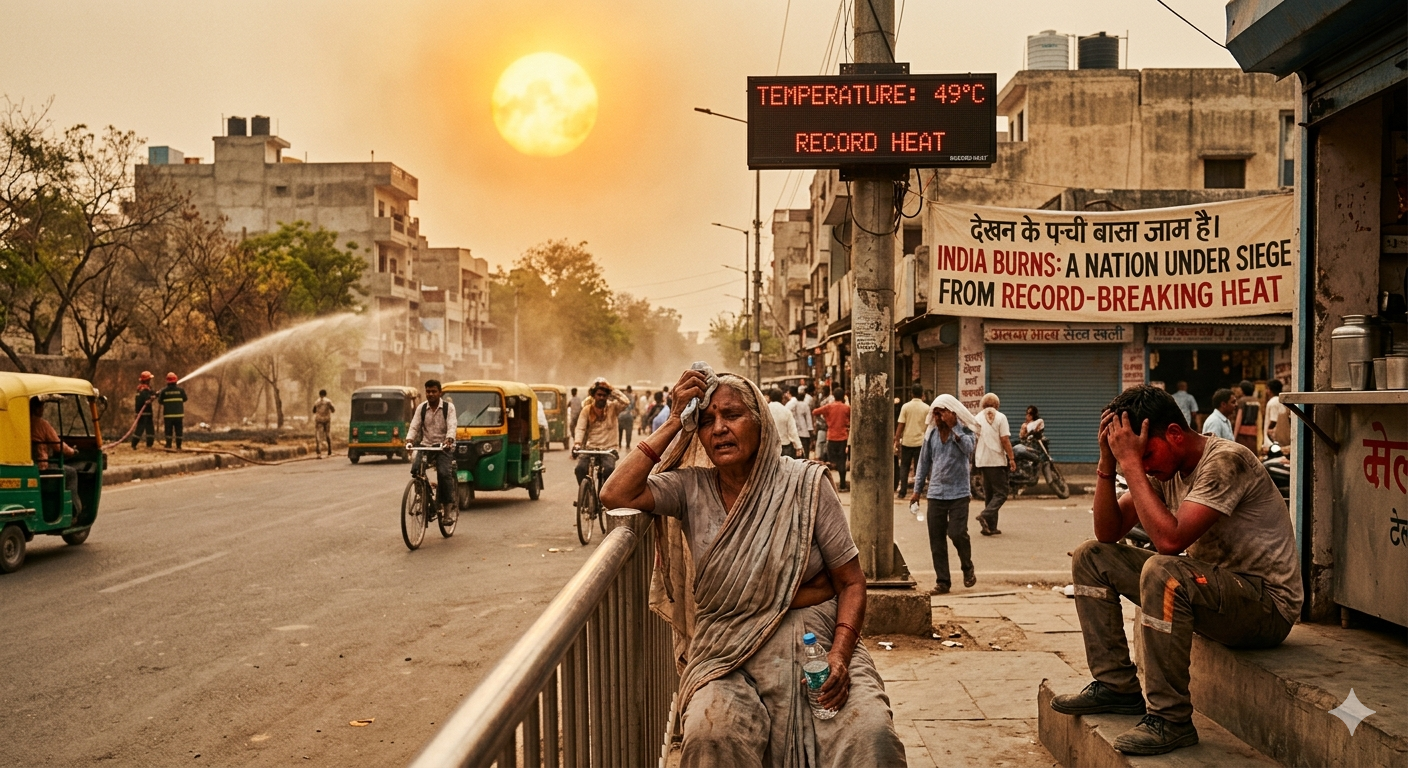
India is enduring one of the most brutal heatwaves in living memory. On May 22, 2026, every single spot in the world’s top 50 hottest cities list belonged to India — a staggering milestone that meteorologists say underscores the terrifying new reality of climate change on the subcontinent.From the scorched plains of Uttar Pradesh to the sweltering Vidarbha region of Maharashtra, and from the desert districts of Rajasthan to the humid coasts of Odisha, no part of north or central India has been spared. The India Meteorological Department (IMD) has issued red, orange, and yellow alerts across dozens of districts, urging citizens to stay indoors, stay hydrated, and avoid outdoor exposure during peak daytime hours.The IMD has warned that severe heatwave conditions are expected to continue over central India, while northern states including Delhi, Punjab, Haryana, Rajasthan, and Uttar Pradesh are likely to witness extreme heat well into late May 2026. Experts attribute the ferocity of this season to a persistent “heat dome” of high-pressure atmosphere trapping hot air over the subcontinent, the ongoing impacts of climate change, declining green cover, rapid urbanisation, and the absence of pre-monsoon rains.
“It’s not just one city hitting extreme temperatures — it’s the whole country dominating the global hot list in a single day. That says a lot about how severe this 2026 heatwave really is.”— India TV News, May 22, 2026
STATE-BY-STATE TEMPERATURE BREAKDOWN
MAHARASHTRA — 47.2°C | 🔴 Red AlertHottest city: Brahmapuri, Vidarbha RegionMaharashtra’s Vidarbha region has recorded the country’s highest temperature this season. Cities across Vidarbha have consistently breached 46°C, pushing hospitals to report rising heat stroke cases. The region is under a sustained red alert with no immediate relief in sight
.UTTAR PRADESH — 46.4°C | 🔴 Red AlertHottest city: Banda; Sultanpur 43.4°C, Prayagraj 43.2°CUP dominates the hottest cities list with six cities above 45°C. Banda, Sultanpur, Prayagraj, Jhansi, Hardoi, and Lucknow are all recording extreme departures from seasonal norms. By Friday evening, at least 19 Indian cities recorded temperatures above 45°C, with six of them in Uttar Pradesh alone.
ODISHA — 45°C | 🔴 Red AlertHottest cities: Balangir & Titlagarh, Western OdishaWestern Odisha’s Balangir and Titlagarh consistently rank among the country’s hottest places, but 2026 is on another level. Coastal districts face additional stress from hot and humid conditions. The IMD has forecast continued extreme heat for the state in the coming days.
BIHAR — 44°C | 🟠 Orange AlertHottest city: Bhagalpur; also Begusarai, Motihari, Munger, Bhojpur, SiwanBihar’s eastern districts are facing extreme heat. Bhagalpur hit 44°C and several cities are hovering around 43°C. Outdoor workers, farmers, and daily wage labourers in rural Bihar are among the worst affected with little access to cooling infrastructure.
RAJASTHAN — 46–47°C (Forecast) | 🔴 Red AlertDistricts: Sri Ganganagar, Hanumangarh, Jhunjhunu, Bharatpur, Dholpur, PhalodiIMD has warned that parts of western Rajasthan could see 46–47°C on May 26–27 with severe heatwave pockets. Kota recorded 42°C while Jaipur, Jodhpur, Udaipur, and Bikaner are all above normal. Dust-laden winds of 20–30 km/h are compounding the misery. A western disturbance from May 28–29 may bring brief relief with thunderstorms and light rain.
MADHYA PRADESH — 45°C+ | 🔴 Red AlertDistricts: Chhatarpur (Red Alert), West MP broadly under warningChhatarpur district is under red alert with temperatures crossing 41°C. Cities like Orai and Auraiya bordering UP have breached 45°C. Dry winds and the heat dome are combining to create dangerous outdoor conditions across the state.
HARYANA & DELHI-NCR — 42°C+ | 🟠 Orange AlertAreas: Noida, Greater Noida, wider Delhi-NCRDelhi recorded its warmest night in 14 years, with overnight temperatures offering little relief. Temperatures in Noida and Greater Noida crossed 42°C. The IMD has forecast warm nights to continue across Delhi, Haryana, and parts of western UP, compounding cumulative heat stress on residents.
WEST BENGAL — 44°C | 🟠 Orange AlertHottest city: Asansol; Gangetic West Bengal broadly affectedAsansol recorded 44°C, placing it among India’s hottest cities this season. Gangetic West Bengal faces hot and humid conditions — a particularly punishing combination given the high moisture levels along the coast.
CHHATTISGARH — 44°C+ | 🟠 Orange AlertCentral & Northern districtsChhattisgarh is feeling the worst of this season alongside its neighbours. The state’s landlocked geography and ongoing forest loss are contributing to higher-than-normal temperatures in urban centres.
TELANGANA — 43°C+ | 🟠 Orange AlertHyderabad & interior districtsTelangana features in the IMD’s heatwave advisory for isolated places. Interior districts are recording temperatures well above seasonal norms, with urban heat island effects intensifying conditions in Hyderabad.
JHARKHAND & PUNJAB — 42°C | 🟡 Yellow AlertMultiple districts under advisoryBoth states have been included in heatwave alerts for isolated areas. Punjab’s agricultural zones and Jharkhand’s mineral belt districts are particularly vulnerable due to lack of shade and the nature of outdoor labour.
ANDHRA PRADESH & TAMIL NADU — 38–42°C | 🟡 Yellow AlertCoastal & interior zonesCoastal Andhra faces hot and humid conditions, while isolated places in Tamil Nadu-Puducherry-Karaikal have been placed under heatwave advisories. The approaching southwest monsoon is expected to bring relief to these regions sooner than the north.
WHY IS 2026 SO EXTREME?
Meteorologists and climate scientists are pointing to a confluence of factors driving the exceptional severity of this year’s heatwave. Chief among them is a “Persistent Heat Dome” — high-pressure atmospheric conditions acting like a lid on a pot, trapping hot air over the Indian subcontinent and preventing it from dissipating.The prolonged effects of the La Niña climate pattern in the Pacific Ocean are also being cited for disrupting typical monsoon formation and intensifying pre-monsoon heat. Compounding this are human-induced global warming, deforestation, loss of wetlands, and rapid urbanisation — all of which have weakened India’s natural buffers against extreme heat.Urban centres filled with concrete and asphalt are acting as heat sinks, absorbing solar radiation by day and releasing it slowly at night. On one Thursday night this season, nearly 35 Indian cities recorded temperatures at or above 30°C, leaving residents with almost no overnight relief.
HEALTH IMPACT: HOSPITALS ON HIGH ALERT
Hospitals across several states are reporting increasing cases of heat-related illness. Children, older adults, and outdoor workers are bearing the heaviest burden. Doctors warn that prolonged exposure may affect not only physical health but also eye and neurological functioning among vulnerable populations.Early symptoms of heat stress include heat cramps, oedema (swelling), and syncope (fainting). In severe cases, heat stroke — with body temperatures exceeding 40°C and accompanied by delirium, seizures, or coma — can be fatal without prompt medical attention.
⚠️ IMD Safety Advisory — What You Must Do:
Stay indoors between 11 AM and 4 PM, especially on red and orange alert days
Drink at least 3–4 litres of water daily, even if you don’t feel thirsty
Keep ORS, lassi, lemon water, buttermilk, or rice water readily available
Wear loose, light-coloured cotton clothing and cover your head outdoors
Check on elderly neighbours, young children, and outdoor workers regularly
Seek medical help immediately at the first sign of heatstroke
WHEN WILL RELIEF COME?
The southwest monsoon is advancing faster than expected and is forecast to reach Kerala around May 26 — earlier than its normal onset date of June 1. This is welcome news for southern India, but the monsoon’s northward progression typically takes several more weeks, meaning states like Rajasthan, Uttar Pradesh, and Delhi may not see meaningful relief until late June or July.In Rajasthan, a fresh western disturbance expected from May 28–29 could bring strong thunderstorms and light rainfall, potentially lowering temperatures by 2–3°C. Himachal Pradesh is similarly expected to receive a wet spell, while Jammu & Kashmir has already seen unseasonal snowfall at higher altitudes.For the vast majority of Indians living in the northern and central plains, however, the coming days promise continued extreme heat. The IMD urges state governments to enforce heat action plans, open cooling centres, and ensure that the most vulnerable communities receive proactive support.
“Rising global temperatures, declining green cover, and rapid urban expansion are amplifying heatwave frequency and severity across India. This is no longer an anomaly — it is the new normal.”
— Environmental Experts, India TV NewsAs India grapples with this crisis, the scale and intensity of the 2026 heatwave is a stark reminder that climate adaptation is no longer a future concern — it is an urgent, present-day emergency demanding immediate action from governments, communities, and individuals alike.